
The fire comes first, the drip comes later
Chimney fires often start on the first cold nights of the season, when a flue that sat unused all year is suddenly asked to carry a hot fire. The damage stays hidden until the first proper rain. Then a damp patch appears near the fireplace, water ticks into the firebox, or the room starts to smell musty, and the owner does not connect it to the fire weeks earlier.
The link is real. Heat from a flue fire cracks the parts of a chimney that keep water out, and rain finds those cracks long before anyone climbs up to look.
Parts that crack in the heat
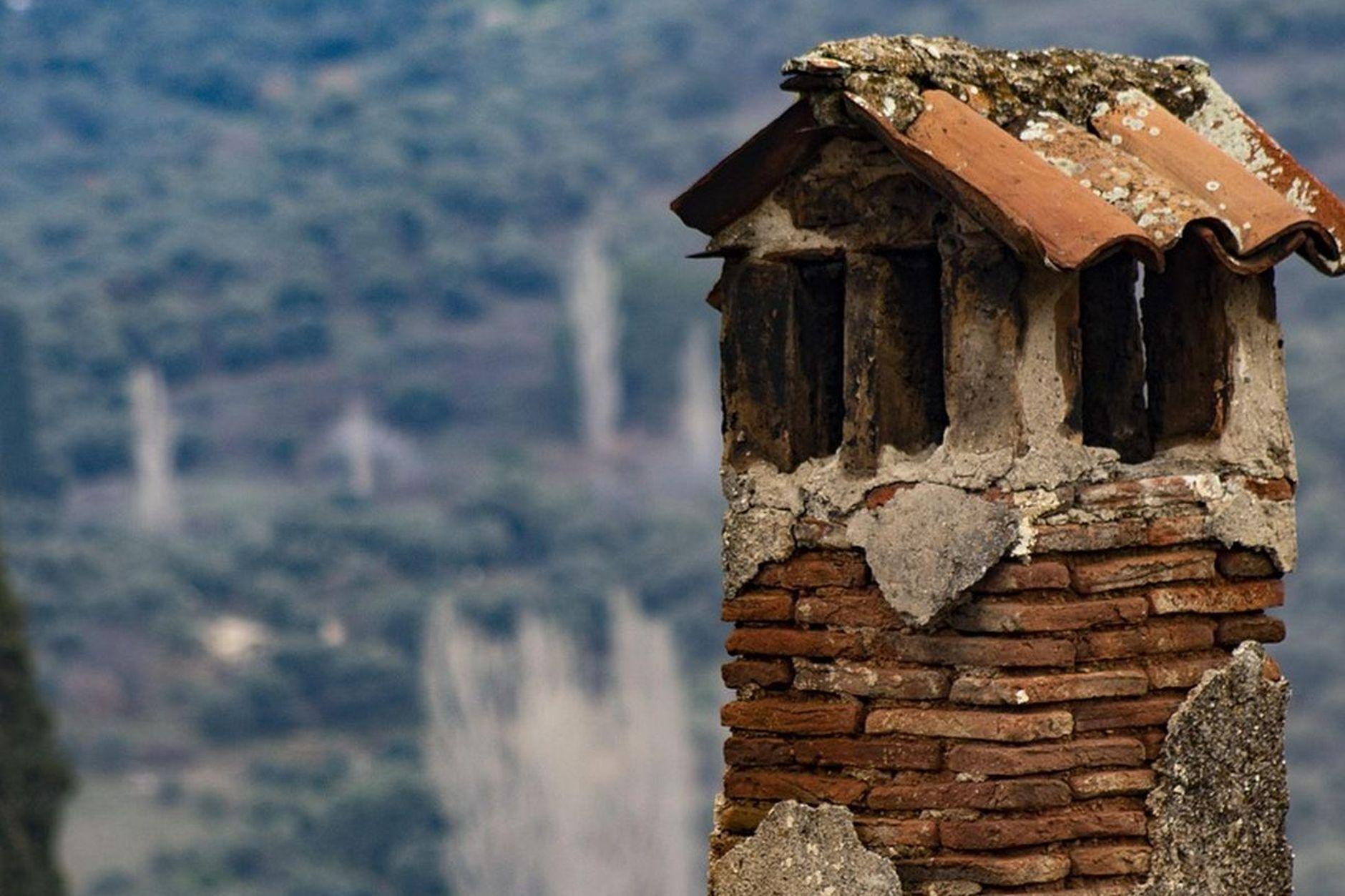
- The crown. The concrete or mortar slab on top of the brick grows with heat faster than the brick below it. A hard fire can split it from the flue outward, and every split becomes a gutter straight into the masonry.
- The flue tile. Tile that cracks in a fire lets water that enters at the top seep sideways into the brick rather than running down to the firebox.
- The cap. Mesh burns through and the hood can warp, so rain and debris reach the crown and the flue.
- Sealant at the flashing. Caulk and roof cement where the metal meets the brick can harden and pull away after heat runs through the stack.
- The damper. A plate that bowed in the fire no longer closes flat, and water that does reach the firebox sits there.
The jobs that stop the water
| Job | What it fixes | Price |
|---|---|---|
| Finding where water gets in and stopping it | The source of the leak, whichever part it is | $545 to $3,250 |
| Rain and ember cap with mesh, fitted | Rain and debris down the flue | quoted after we measure |
| Sloped diverter on the roof's high side | Water pooling behind a wide stack | $435 to $985 |
| Diverter plus new metal at the roof joint | Pooling water and failed flashing together | $655 to $1,600 |
Crown repair, waterproofing, chase covers and flashing on its own have no published figure. We price them per chimney once we have measured.
Our chimney leak repair page sets out how a leak is traced and closed. Crown repair, flashing repair and waterproofing each have their own page.
Why the camera comes first
After a fire it is tempting to book the leak repair on its own. We would rather not. A leak repair on a chimney with a split flue may stop the drip while leaving the more serious problem in place: a flue that can no longer carry smoke safely. The Level 2 inspection, $380, films the flue and checks the roof and attic in one visit, so the leak and the fire damage are priced together and the roof is opened only once.
If the flue turns out sound and only the top of the chimney is damaged, the job stays small. If the tile is split, relining joins the list, and our post on relining or rebuilding after a flue fire explains how that choice is made.
What decides the price
Four things set the figure for a leak after a fire:
1. How many parts let water in. One cracked crown is a different job from a crown, a cap and failed flashing together. 2. Whether water has already soaked into the brick, which can mean repointing or replacing spalled faces. 3. The width of the chimney, which decides whether a diverter is needed on the uphill side. 4. Access to the roof and the attic.
Use the quote form to tell us when the fire happened, when the water first showed and where in the house it appears. We use that to plan the visit and bring what the likely repair needs.
Waterproofing comes last
A water repellent for masonry helps a sound chimney shed rain, but it is the final coat, not a repair. Sealing over a split crown or open joints traps water in the brick. On a fire-damaged chimney we put the crown, the joints and the flashing right first, then talk about a repellent if the brick still drinks rain.
Factory-built chimneys
Not every chimney here is brick. A metal chimney boxed in a framed chase has a metal cover on top instead of a crown, and heat from a fire can warp it or burn its seal. Water then runs into the chase. A chase cover made to fit is the usual answer, priced on the visit.
When the water and the fire are on one claim
If an insurer is handling the fire, the leak that followed it may belong on the same claim. That is a question for the insurer, not for us, but it helps to have both on one record. Our camera report notes water staining, damp brick and the cracked parts above the roof alongside the fire findings, with a still beside each, so the adjuster sees the chain from heat to crack to leak in one document. Our post on chimney fire claims and the report covers the rest.
While you wait
Keep the fireplace unused, put a tray under any drip in the firebox, and keep stored items away from damp walls. If water is running onto wiring or a light fitting, turn that circuit off at the panel.
Where we work
Cory Chimney Services is based in Paramount and works across Lynwood, Norwalk, Carson and the cities nearby.
If rain has found its way in since the fire, the contact page is the quickest route to a visit that deals with the water and the flue in one trip.
Wondering What Your Own Chimney Went Through?
Cory Chimney crews run a camera up the flue, label each photo with where it was taken and tell you in writing whether the fireplace can be used. We set out from Paramount for Lynwood, Norwalk, Carson and the other towns on our map.